How to Set Up a Nativity Scene: Figure Order and 2026 Dates
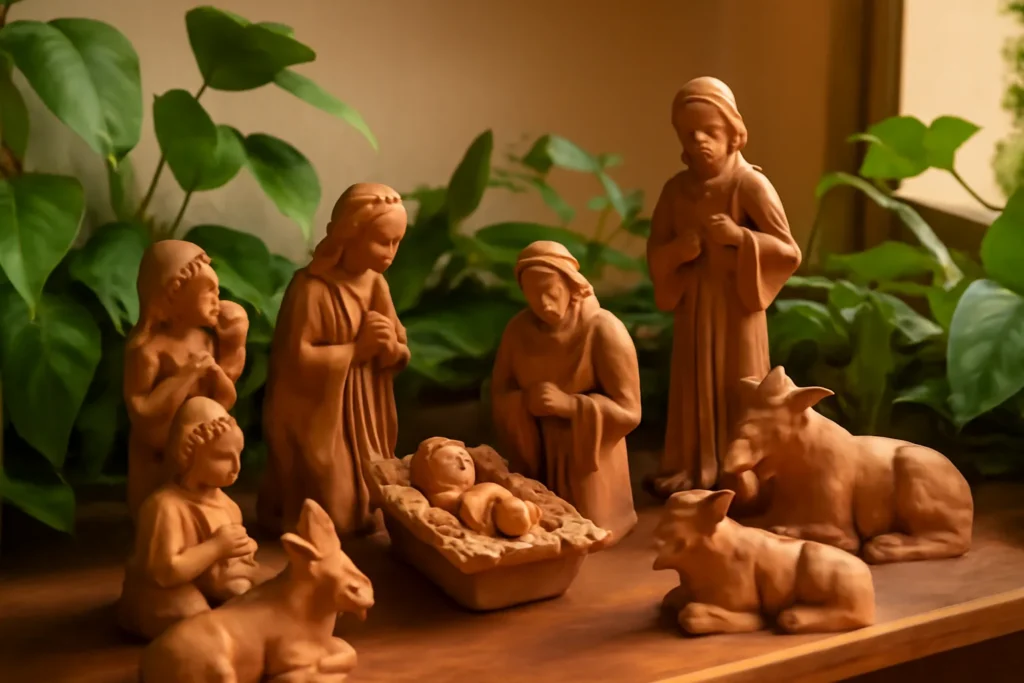
A nativity scene starts with the setting: the cave or stable at the back, the empty manger in the center, Mary and Joseph on either side, the ox and donkey behind, shepherds arriving from one side and the angel up high. Baby Jesus goes in only on the night of December 24, and the Wise Men start far away, at the other end of the shelf or the room.
That last point is where many homes slip: the Wise Men sit right next to the manger from day one, and by Epiphany they have nowhere left to travel. Anyone who grew up watching a grandparent move the Magi a little closer each day knows how much children love that small ritual. Below you’ll find the order figure by figure, this year’s calendar and what each figure means.
Nativity Scene Order: Where Each Figure Goes, Step by Step
- Choose the spot. Pick a sturdy surface away from direct sunlight, heat sources and foot traffic. In a home with small children or pets, a higher piece of furniture helps prevent falls.
- Prepare the base. Fabric, crumpled kraft paper, wood shavings, sand or artificial moss all work well. Avoid taking moss and plants from the wild.
- Place the cave or stable in the center or at the back of the scene.
- Set the empty manger in the middle. Baby Jesus only arrives on the night of December 24.
- Place Mary and Joseph on either side of the manger, facing it.
- Settle the ox and the donkey behind or beside the manger, close to the family.
- Arrange the shepherds and sheep on one side, as if they’re just arriving.
- Attach the angel to the top of the stable, with the star just above it.
- Keep the Wise Men far away, at the other end of the shelf or the room, and move them a little closer each day.
- Light it carefully. Use LED lights and never leave lit candles near the hay, the fabric or the figures.
Set Up November 29, Baby Jesus on December 24, Wise Men on January 6
There’s no required rule, but there is a traditional calendar that many families follow. For this Christmas season, the dates fall like this:
| Stage | Date | Day of the week |
|---|---|---|
| Set up the nativity scene, without Baby Jesus | From the first Sunday of Advent, November 29, 2026 | Sunday |
| Place Baby Jesus in the manger | Night of December 24, 2026 | Thursday |
| Christmas Day | December 25, 2026 | Friday |
| The Magi reach the manger | Epiphany, January 6, 2027 | Wednesday |
| Take it down | From January 6, 2027 | Wednesday onward |
Baby Jesus is usually placed in the manger at midnight or on returning from Midnight Mass; in some families, that job goes to one of the children. In some traditions, the nativity stays up until February 2, the Feast of the Presentation of the Lord. To see how the four Sundays of the season line up, read our guide to Advent 2026 and when it starts.
Where the Nativity Scene Comes From
In languages like Italian and Portuguese, the word for a nativity scene comes from the Latin praesepium, meaning a manger or stall, the place where animals eat. According to the Gospel of Luke, it was in a manger that Mary laid her newborn son, because there was no room for the family at the inn.
Tradition credits Saint Francis of Assisi with creating the nativity scene as we know it. At Christmas in 1223, in the small town of Greccio, Italy, he prepared a manger with hay, an ox and a donkey, and the night Mass was celebrated there. The event was recorded by the saint’s earliest biographers.
Images of Jesus’s birth already existed before then, in paintings and sculpture, but the staged scene at Greccio inspired the custom. Over time, nativity scenes with figures spread through churches and homes across Europe, and some cities, such as Naples, became famous for their large, richly detailed scenes. From Europe, the tradition traveled with missionaries and settlers to the Americas and beyond.
What Each Nativity Figure Means
Each figure has its own meaning. The table sums up who’s who and where each figure comes from:
| Figure | Who it is | What it symbolizes |
|---|---|---|
| Baby Jesus | The center of the scene, lying in the manger | God born poor and vulnerable |
| Mary | The mother of Jesus | Welcome, faith and surrender |
| Joseph | His foster father, a carpenter | Protection and care for the family |
| Angel | The messenger who announces the birth to the shepherds (Luke) | Good news and peace |
| Shepherds and sheep | Farmworkers keeping watch over their flock at night (Luke) | The simple and humble, the first to hear the news |
| Star | The light that guided the Magi (Matthew) | Guidance and hope |
| Magi (Wise Men) | Wise men from the East bearing gifts (Matthew) | Faraway peoples who recognize the child |
| Ox and donkey | The animals of the stable | All of creation present at the birth |
The Magi’s gifts also carry an old symbolic reading: gold speaks of kingship, frankincense, used in worship, speaks of divinity, and myrrh, a resin used to anoint the dead, points to Jesus’s humanity and to his death.
What’s in the Gospels and What Came From Tradition
Not everything in a nativity scene is written in the Bible. Knowing that doesn’t take away from the beauty of the scene, but it does help when kids start asking questions.
- Ox and donkey: they don’t appear in the accounts of the birth. Tradition added them by linking the scene to a verse in the Book of Isaiah about the ox and the donkey that know their master.
- Three kings: Matthew speaks of Magi from the East without saying how many there were or calling them kings. The number three was inferred from the three gifts, and the title of king came from tradition.
- Melchior, Caspar and Balthazar: these names appeared centuries later, in Western Christian tradition. The Gospels don’t name the Magi.
- Cave or stable: the Gospels mention only the manger. The idea of a cave comes from an ancient tradition in Bethlehem, and the wooden stable is the most common version in Europe.
- Magi and shepherds together: Matthew says the Magi found the child in a house, which leads many scholars to think the visit came some time after the birth. In the nativity scene, the two moments share the stage.
Tips for Your Nativity Scene at Home
Plaster and clay figures break easily, and painted figures can fade if they sit in the sun. Store each one wrapped in paper or fabric, in a sturdy box.
With children, it’s worth having a “play” nativity made of felt or wood that they can handle as much as they like, and keeping the family nativity on a high shelf. Setting it up together and telling them who each figure is turns the task into a tradition.
Handmade nativity scenes in clay, wood, straw and fabric are made by artisans in many parts of the world. A set bought directly from the person who made it can become a family heirloom, gaining a little more history every Christmas as new figures join the scene.
Where Christmas falls in summer, as in Australia and New Zealand, keep the scene away from sunny windowsills and don’t let real hay or moss sit under hot bulbs; artificial straw and LED lights are the safer pair in a warm room.
You can also make a nativity scene from repurposed materials, such as boxes, craft sticks and paper tubes. If space is tight, a small shelf nativity does the job just as well, and it can sit high enough to stay out of reach of little hands and curious pets.
However simple or elaborate your scene, may the empty manger waiting for the 24th bring a little quiet to your home in the busy weeks of December.
Frequently Asked Questions
Who invented the nativity scene?
Tradition credits Saint Francis of Assisi, who at Christmas in 1223, in Greccio, Italy, prepared a manger with hay, an ox and a donkey for the night Mass. Images of the birth already existed, but not the staged scene.
When do you put Baby Jesus in the nativity scene?
The custom is to leave the manger empty and place Baby Jesus on the night of December 24, at midnight or on returning from Midnight Mass. This year, that falls on the night of Thursday into Friday.
Are the ox and donkey in the Bible?
Not in the accounts of the birth. They entered the nativity scene through tradition, which links them to a verse in the Book of Isaiah about the ox and the donkey that know their master.
When should you take down the nativity scene?
Most people take it down after Epiphany, January 6, when the Magi reach the manger. In 2027, that date falls on a Wednesday. Some families keep the nativity up until February 2.