Meaning of Christmas Decorations: Star, Bell and More (Table)
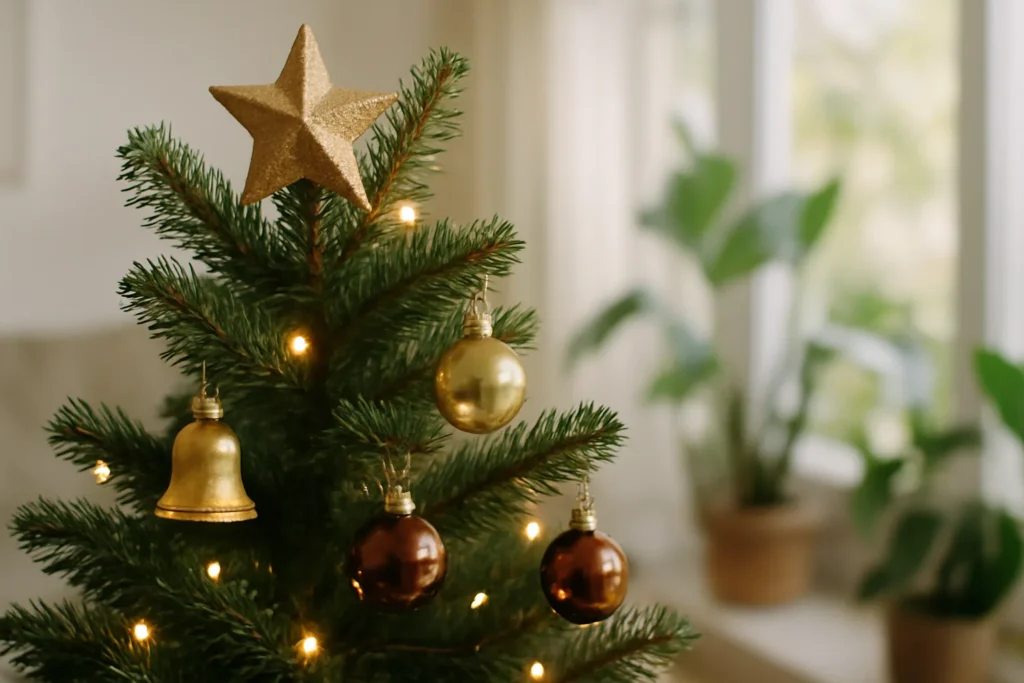
The star recalls the Star of Bethlehem that guided the Magi; the bell announces the joy of Jesus’s birth; ornament balls stand for fruit and abundance; and the lights represent Christ as the light of the world. Some of these meanings come from the Bible, while others grew out of European folk customs and picked up new readings over time.
And here’s the catch: a few of the explanations shared every December, like the candy cane shaped as a J for Jesus, have no reliable record behind them. The table below sorts out what comes from where, decoration by decoration, so you have the story ready to tell the kids while you trim the tree together.
Table: what each Christmas decoration symbolizes
| Decoration | What it symbolizes | Where the meaning comes from |
|---|---|---|
| Tree | Life that endures | A custom from German-speaking regions, from the 16th century on |
| Star | Guidance and hope | The Star of Bethlehem, in the Gospel of Matthew |
| Angel | Proclamation and peace | The announcement to the shepherds, in the Gospel of Luke |
| Ornament ball | Fruit and abundance | Apples on the paradise trees (traditional explanation) |
| Lights | Christ, the light of the world | The Gospel of John and the old candles on trees |
| Bell | Joy and proclamation | Church bells on great feast days |
| Wreath | Eternity and welcome | Its circular shape and evergreen foliage |
| Holly | The Passion of Christ, in the Christian reading | Winter plants of European tradition |
The rest of this guide goes symbol by symbol, separating what is documented history from what is tradition or legend.
Why We Decorate Our Homes at Christmas: Evergreens and Winter Light
There are records of Romans decorating their homes with green branches during their winter festivals. In many European cultures, plants that keep their leaves all year, such as pine, holly and ivy, were seen as a sign of life in the middle of the cold. Christianity absorbed some of these customs and gave them new meanings.
The decorated tree as we know it today has its best-known records in German-speaking regions from the 16th century on. One of the most frequently cited explanations links the custom to the “paradise trees,” hung with apples, that were used in medieval religious plays about Adam and Eve. The tree spread around the world in the 19th century and brought many of the ornaments we still use along with it.
Star on Top: the Star of Bethlehem (and Why Some Homes Use an Angel)
Star
The star at the top of the tree recalls the Star of Bethlehem, which, according to the Gospel of Matthew, guided the Magi from the East to the infant Jesus. It represents guidance, hope and the path toward what matters most. That’s why it usually takes the highest spot in the display.
Angel
The angel is the other traditional tree topper. It recalls the announcement of the birth to the shepherds, told in the Gospel of Luke, and symbolizes the message of peace and good news. In many families, choosing between a star and an angel comes down to taste or heritage: you use whatever came from your parents and grandparents.
Ornament Balls Are Fruit, Lights Are the Light of the World
Ornament Balls
A widely repeated explanation connects round ornaments to the apples hung on the old paradise trees, which would give them the meaning of fruit, abundance and, for Christians, new life. There’s no way to prove that direct link, but the association between ornaments and fruit is an old one.
Hand-blown glass ornaments became famous in the 19th century in the town of Lauscha, Germany, known for its glassmaking. Lighter, sturdier materials came later, and today they’re the norm in homes with kids and pets.
Lights and Candles
Lights symbolize Jesus as the “light of the world,” a phrase from the Gospel of John, and the victory of light over darkness. Before electricity, trees were lit with real candles, which carried a fire risk. In the 1880s, the first trees with electric bulbs appeared in the United States, and over time they replaced candles.
Today, the safety rule is to use string lights in good condition, turn them off when you leave the house, and never leave candles burning near ornaments, curtains or branches.
The Bell Announces, the Wreath Means Eternity, the Bow Has No Religious Meaning
Bell
The bell represents proclamation and joy. For centuries, church bells called people to worship and marked the great feasts, including Christmas night. As a decoration, it’s a reminder that there’s good news to share.
Wreath
A wreath is a circle with no beginning and no end, so it’s read as a symbol of eternity and unity. Traditionally made from evergreen foliage, it also carries the idea of life that endures. Hung on the front door, it works as a sign of welcome to everyone who arrives.
Bows and Ribbons
Bows and ribbons don’t have a defined religious meaning. They call to mind wrapped gifts and the idea of ties between people, and they’re part of the decorating mostly for their beauty and finishing touch.
The Colors
The traditional colors have also picked up symbolic meanings. The green of the foliage stands for life and hope; red is associated with love and, in the Christian reading, the blood of Christ; gold suggests light and the gold brought by the Magi. These are interpretations established by long use, not rules.
Holly, Mistletoe, Poinsettia and Candy Cane: Plants and Sweets That Became Symbols
Holly
Holly, with its spiky leaves and little red berries, shows up in wreaths and arrangements. In the Christian reading, the leaves recall the crown of thorns and the berries the blood of Christ. It’s a cool-climate plant, so in warmer regions it almost always appears in artificial form.
Mistletoe
The custom of kissing under a sprig of mistletoe became popular in England, and the exact origin of the practice is uncertain. What we do know is that the plant was surrounded by beliefs long before Christmas: the Roman author Pliny the Elder described rituals involving mistletoe performed by Celtic priests.
Poinsettia
The plant with bright red leaves known as the poinsettia is native to Mexico. Its English name honors Joel Roberts Poinsett, the American diplomat who brought it from Mexico to the United States in the 19th century. A Mexican legend tells of a poor child who, with nothing to offer the Baby Jesus, brought a handful of branches that turned into red flowers.
Candy Cane
Several explanations circulate for the red-and-white striped candy cane, such as that it imitates a shepherd’s crook or the letter J, for Jesus. There’s no reliable record of either: the candy’s origin is uncertain, and the religious interpretations seem to have come later.
How to use these symbols in your own decorating
When it’s time to put all this into practice, a few simple ideas help:
- choose one central symbol for the year, like the star, and repeat it on the tree, the table and your cards;
- tell the kids what each piece means while you decorate the tree together;
- mix older family ornaments with new pieces to keep your home’s memories alive;
- in hot weather, swap lit candles for LED lights, which give off less heat.
If your Christmas falls in summer, as it does in Australia and New Zealand, many of these symbols were born in a northern winter: evergreens as life in the cold, lights against the long dark nights. They still work beautifully in a bright, warm December. The meaning travels well even when the snow doesn’t, and LED lights on a balcony or a wreath of fresh local greenery on the door carry the same message of welcome.
To tie it all together, take a look at the Christmas color trends for 2026 and pick a palette that lets your favorite symbols stand out.
Whichever symbols end up on your tree this year, may each one come with a story someone at home is happy to tell again.
Frequently Asked Questions
What does the star on a Christmas tree mean?
It recalls the Star of Bethlehem, which, according to the Gospel of Matthew, guided the Magi to Jesus. It symbolizes guidance and hope, which is why it usually sits at the top of the tree.
What do Christmas ornament balls mean?
The most often cited explanation links them to the apples on the old paradise trees, suggesting fruit and abundance. There’s no proof of that direct origin, but the association between ornaments and fruit is an old one.
What does the bell represent at Christmas?
It represents the proclamation and joy of Jesus’s birth, a reference to church bells, which for centuries called people to worship and marked the great feasts.
Why do people hang a wreath on the door at Christmas?
The circle with no beginning and no end symbolizes eternity and unity, and the evergreen foliage stands for life. On the door, the wreath is a sign of welcome to everyone who arrives.